
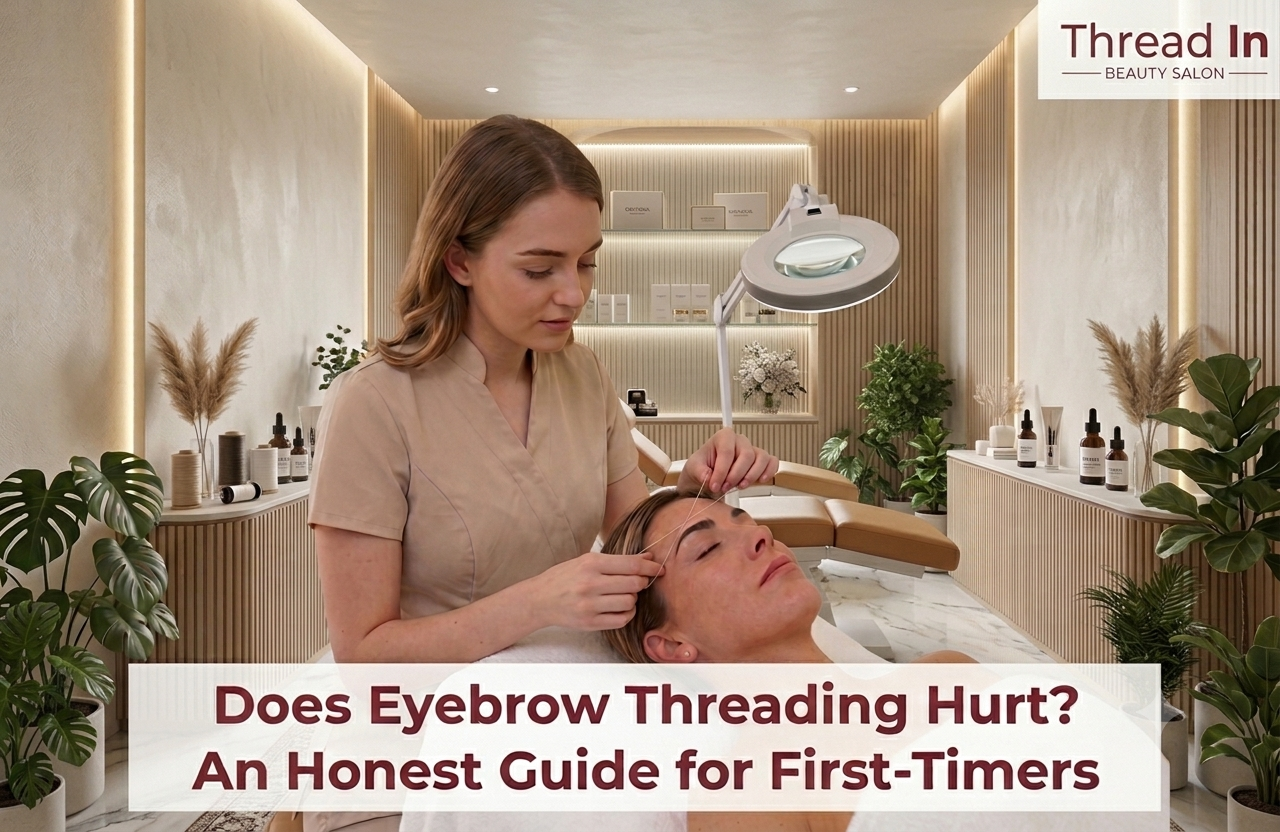
You have decided to tidy up your brows, but the stories you hear are mixed. One friend says it barely stings. Another says it made her eyes water. Now you are not sure what to believe.
So, does eyebrow threading hurt? For many people it is a short, brief discomfort, not lasting pain. Threading uses a twisted cotton thread to lift unwanted hairs out of the skin. How it feels depends on your skin, your hair growth and the area being shaped. This guide explains what to expect, so you can book with confidence.
Does Eyebrow Threading Hurt? What It Really Feels Like
Most people describe a quick pinch or tug as the hairs come out. Some also feel a light sting or tingle. The feeling is sharp, but it passes within moments.
Your first visit can feel stronger than later ones. You do not know the sensation yet, so your body tends to tense up, and tense skin can feel more sensitive. Many people say it feels easier the next time.
Threading is not painless, and it is not extremely painful either. Some people find it mild and others find it quite sharp. Both are normal.
Why Do Some People Feel It More Than Others?
The skin around your brows is thin and delicate, so you can feel even fine hairs being removed. A few things can change how it feels:
- Some areas around the brow may feel more sensitive than others. This is different for everyone.
- Several hairs removed one after another can feel different from single hairs.
- Some people are simply more sensitive to discomfort.
- If you have waxed or tweezed before, threading may feel more familiar.
No single spot hurts every person. If one area feels stronger than the rest, tell your therapist.
What Happens During Your First Appointment?
If it is your eyebrow threading first time, it helps to know the usual order of events. Steps can differ from salon to salon, so ask if you are unsure. In general:
- A short chat: The therapist asks what shape you want and whether you have any concerns.
- Preparation: The brow area is checked and prepared.
- Threading: Unwanted hairs are removed with the twisted thread.
- Shape check: The outline is checked and any agreed changes are made.
- Aftercare: You are told how to look after your skin.
The most useful thing you can do is speak up early. If you want to keep your natural thickness, say so before anything starts. It is easy to remove a little more hair later, but you cannot put it back.
How to Make Threading Less Painful: Simple Tips
No tip removes all discomfort, but a little planning helps. If you are wondering how to make threading less painful, start with these small habits.
Before your appointment:
- Arrive with clean skin around the brows.
- Skip new or strong skincare products on the day.
- Tell the therapist if your skin is sensitive or has reacted to hair removal before.
- Rebook if the area is sunburned, broken or irritated.
During your appointment:
- Relax your forehead and face.
- Follow the therapist’s guidance on how to sit or hold your skin.
- Ask for a short pause if you need one.
- Speak up straight away if more hair is being removed than you wanted.
You should not need medicine to get through a beauty treatment. If you feel you would, talk to your therapist or doctor first.
What to Expect Straight After Threading
Some mild reactions are common and usually settle quickly:
- Light redness
- Slight tenderness
- A warm or tingling feeling
- Tiny patches of irritation
To help your skin settle, avoid rubbing, scratching or touching the area. Keep it clean, avoid harsh products until the skin feels normal, and follow any aftercare advice you are given.
Do not ignore strong reactions. If you notice significant swelling, redness that spreads, severe pain or signs of infection, see a doctor.
Is Threading Suitable for Everyone?
Not always. Very sensitive, inflamed, sore or broken skin should be discussed with the therapist before treatment. It may be better to wait until the skin has settled.
Some skincare products and medicines can make skin more delicate. Tell your therapist about anything you use, including prescribed creams. A therapist can talk about suitability, but cannot diagnose a skin condition. For that, see your doctor.
How to Feel More Confident Before You Go
A clear chat with your therapist makes a big difference. Try these:
- Bring a photo of a brow shape you like. It is easier than describing it.
- Say how much change you want, from a light tidy-up to stronger definition.
- Ask the therapist to check the shape before more hair is removed.
- Mention discomfort straight away instead of quietly putting up with it.
- Ask any questions you have before the treatment begins.
Conclusion: Your First Threading Appointment Doesn’t Need to Be a Mystery
Threading may cause brief discomfort, and how it feels is different for every person. Preparing your skin and talking openly with your therapist can make it much more comfortable.
Before you start, tell your therapist the shape you have in mind and any worries you have. If you would like to ask us anything first, visit our contact page.
FAQs
1. Does eyebrow threading hurt more than tweezing?
It depends on the person. Both can cause a brief pinch, and some people find threading quicker because many hairs are removed at once.
2. How long does the discomfort last?
The sharp feeling lasts only while hairs are being removed. Mild redness or tenderness may stay a little longer. If it does not settle or gets worse, seek medical advice.
3. Can I get threaded if I have sensitive skin?
You may be able to, but tell your therapist first. If your skin is irritated or sore, it may be best to wait.
4. Can I ask the therapist to stop during the treatment?
Yes. You can ask for a pause, or ask the therapist to stop and check the shape at any point.
5. Do I need to book ahead?
Walk-ins are welcome depending on availability, but booking ahead is recommended.