
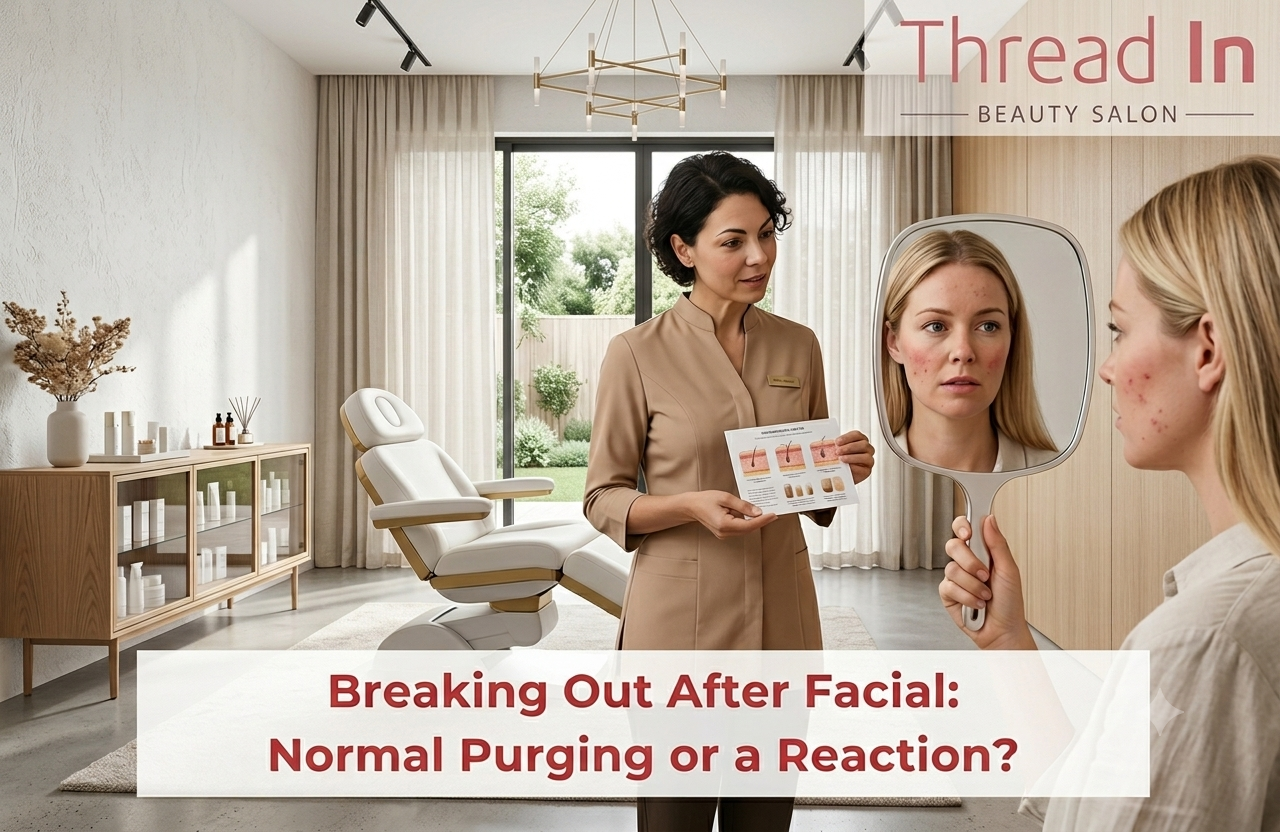
You had a facial to make your skin feel fresh and clear. But a day or two later, you see new spots. If you are breaking out after facial treatment, here is the simple answer: not every breakout is “purging”. New pimples do not always mean the facial is working.
Many things can cause spots after a facial. How soon they appear, how they look and how they feel can help you understand what is going on.
In this guide, you will learn the difference between purging and a skin reaction, what can cause spots, what to do next, and when to get help.
Is It Skin Purging or a Reaction?
“Purging” happens when a treatment or ingredient makes your skin renew itself faster. This can bring blocked pores to the surface sooner, so they show up as spots. It is usually linked to stronger exfoliating treatments or ingredients such as retinoids and some acids.
Not every facial uses these. A gentle cleansing facial is very different from a deep exfoliating treatment. So, not every breakout after a facial is purging.
A skin reaction is different. Your skin may be reacting if the spots come with:
- Unusual redness
- Burning or stinging
- Itching
- Swelling or soreness
- A rash
These signs cannot tell you the exact cause on their own. But they do suggest your skin is upset, not just clearing out.
Everyone’s skin is different. When the spots appear or where they show up is not a sure test. If you are worried or the spots do not go away, a trained professional can check your skin.
What Can Cause Pimples After a Facial?
There is usually no single reason for pimples after facial treatment. Some common possibilities are:
- The treatment itself. Exfoliating, steaming or removing blackheads can leave skin a little sensitive for a short time.
- A product or ingredient. Your skin may not like something new, even if it suits most people.
- Blocked pores that were already there. These can become more visible or swollen after the skin has been worked on.
- Heavy creams or oils. For some people, these can block pores.
- Touching your face. Freshly treated skin is more delicate, and touching or picking can make spots worse.
These are only possibilities. Without knowing what was used and how your skin normally behaves, it is not fair to blame the therapist, the product or the treatment straight away.
How Can You Recognise Possible Skin Purging After a Facial?
Skin purging after facial treatments is more likely if your facial included deep exfoliation or ingredients that speed up skin renewal. It does not happen after every facial.
To work out what might be happening, ask yourself:
- What type of facial did I have? Was it gentle or a deeper exfoliating treatment?
- What products were used? Your therapist may be able to tell you.
- What is my normal skincare routine? If your skin is not used to exfoliants, it may react more.
- Do these spots look like my usual breakouts? Spots in places where you often get them may be different from spots in new places.
If the spots are new, spreading, painful or getting worse, do not just assume it is purging. Also, a breakout does not prove a treatment is working. There is no set number of days that applies to everyone.
What Should You Do If You Break Out After a Facial?
Keep things calm and simple while your skin settles:
- Use a simple routine. A gentle cleanser and a moisturiser your skin already likes is usually enough.
- Do not pick, squeeze or scrub the spots. This can make them more red and swollen, and may leave marks.
- Stop using new products and strong ingredients for now. This includes scrubs, exfoliants and retinoids.
- Follow the aftercare advice your therapist gave you.
- Contact the salon. Tell them what happened and ask what products or steps were used, if they can share this.
- See a GP, pharmacist or skin doctor if the spots do not improve, get worse or worry you.
Try not to use lots of new spot treatments at once. It makes it harder to know what your skin is reacting to.
When Should You Seek Professional Advice?
A few small spots that go away on their own are usually not a big concern. But you should see a healthcare professional if you have:
- Spots that last a long time or keep spreading
- A lot of pain
- Very red or swollen skin
- Symptoms that are not getting better
Get your skin checked soon if you notice swelling, blisters, strong burning or a rash that is spreading. These may be signs of a stronger reaction.
Only a qualified professional who looks at your skin can tell you if it is an allergy, an infection or another skin problem.
How Can You Prepare for Your Next Facial?
Talking to your therapist before your facial helps them choose the right treatment for you. Tell them about:
- Sensitive skin or any past reactions
- The skincare products you use, especially exfoliants, retinoids or acne products
- Any recent treatments, such as peels, waxing or other facials
- Any breakouts you had after past facials
You can also ask what the facial includes, whether it involves exfoliation or blackhead removal, and whether any step might not suit your skin. At Thread In Beauty Salon, clients are asked to arrive a little early to fill out a facial consultation form. You can talk about your skin before a treatment is chosen.
This will not promise you will never get a spot, but it helps you get a treatment that suits your skin better.
FAQs
1. Is it normal to get a few spots after a facial?
Some people get a few small spots that go away quickly, especially after blackhead removal or exfoliation. Spots that are painful, spreading, burning or swollen are different and should be checked.
2. Can I keep using my usual skincare products after a facial?
Gentle products your skin already likes are usually fine. It is a good idea to stop scrubs and strong ingredients for a short time. Always follow your therapist’s advice first.
3. Should I book another facial if my skin has broken out?
Wait until your skin has settled. When you book again, tell your therapist about the breakout so they can change the treatment or products if needed.
4. Should I tell my therapist what happened?
Yes. Sharing what happened, and even some photos, helps them know which products or steps may not suit you next time.
Conclusion
Spots after a facial can happen for many reasons, and they are not always purging. The best thing you can do is keep your skincare gentle, leave the spots alone and watch how your skin changes over the next few days. If the spots do not settle, get worse or come with pain, burning or swelling, it is worth getting your skin checked by a professional.
If you have had a facial at Thread In Beauty Salon in Bennett Springs, Perth, and have questions about your skin or aftercare, please get in touch through our contact page. We are happy to help you understand your skin and plan your next treatment with care.