Most people think a brow appointment is simple: sit down, hairs come out, done. In reality, a good one involves a series of small decisions. What should stay? What should go? How far should the shape change?
The aim of eyebrow shaping and threading is a neat result that still looks like you. Good shaped brows work with the way your hair grows instead of fighting it. This guide walks through the steps, so you know what is happening and when to speak up. Steps differ between salons, so treat this as general guidance, not a fixed script.
Step One: Discuss the Brow Shape You Want to Keep
The appointment should start with a chat, before any hair is removed. Describe the result you want in plain words. For example:
- “I want to keep my brows full and natural.”
- “Just remove the obvious stray hairs.”
- “I like a soft arch, nothing too sharp.”
- “A neater outline, but no big change.”
Also mention anything you do not want touched. If you have a favourite part of your brow, say so. It is much easier to protect hair before it is removed than to wait for it to grow back.
Step Two: Understand Your Natural Brow Growth Before Shaping
Your brows are not a blank page. They grow the way they grow, and that affects the plan:
- One brow may grow differently from the other. That is normal. Few people have matching brows.
- Your existing brow line is a guide. It helps decide which hairs are strays and which belong to your shape.
- A fixed shape will not suit everyone. A trend that looks great on someone else may not suit your growth.
- Going gently is a smart choice if you are unsure. More hair can be removed later, but you cannot put it back.
Step Three: Agree on the Areas That Need Tidying
Before threading begins, you and the therapist should agree which areas need attention. Be specific:
- Between the brows: Do you want this area cleared, or kept soft?
- Below the brow line: Stray hairs here are often the easiest to tidy.
- Above the brow: Decide whether you want any removed.
- The tail, or outer end: This part affects the overall look of the shape.
You do not need all four areas done. The amount removed depends on your preference and the shape you agree on.
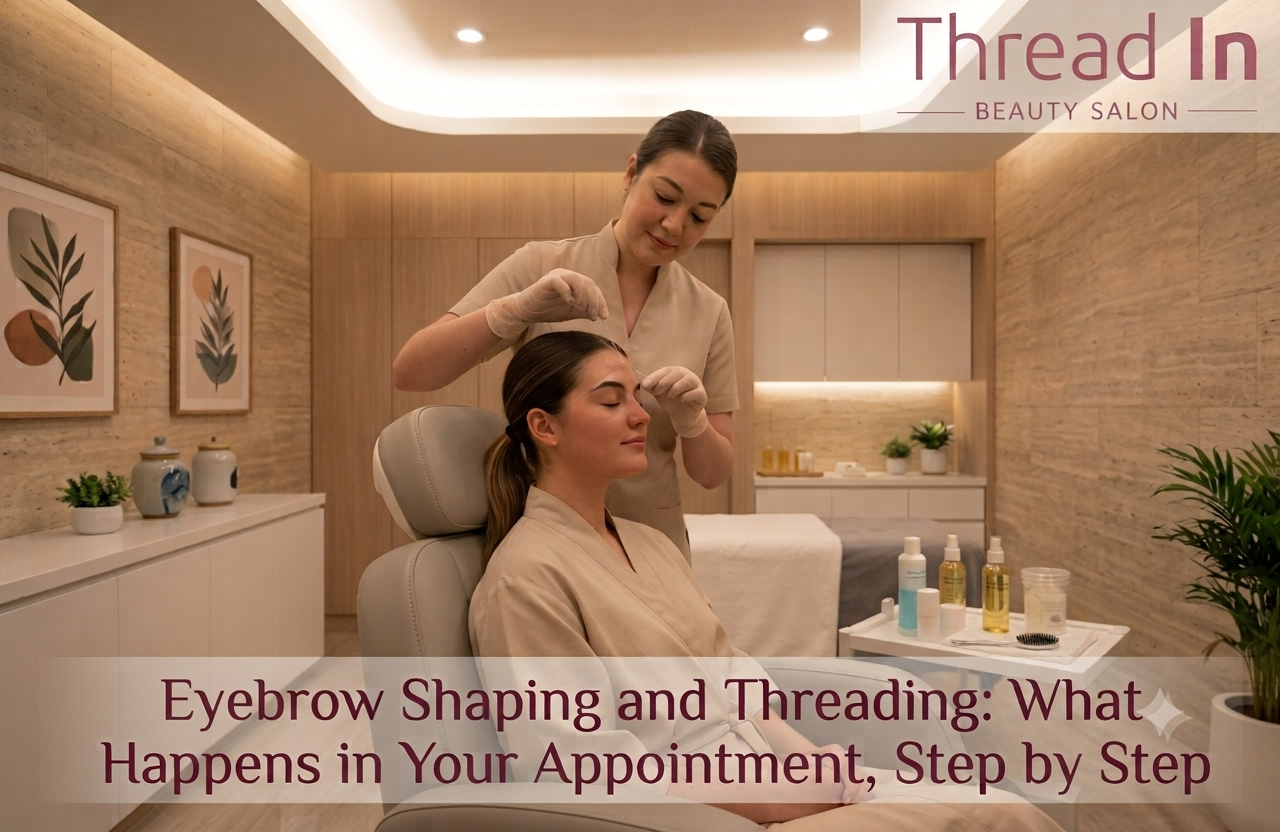
Step Four: How the Brow Thread Is Used During Shaping
Our threading page describes the method as a thin cotton thread that is doubled, twisted and rolled over areas of unwanted hair. In simple terms, the brow thread lifts hair out in short lines instead of one hair at a time.
In general, a careful therapist works in small sections and keeps the outline of the brow in view while she goes. She does not clear a big area without checking how it looks. Threading is quick, and our page says an eyebrow session usually takes about 10 to 15 minutes. It is not painless for everyone, and it is not suitable for every skin condition, so mention any concerns first.
Step Five: Check the Shape Before Removing More Hair
This is the step many people skip, and it can make the biggest difference. Pausing partway through gives you a chance to look before more hair goes. Use the moment to ask yourself:
- Does this still look like the style I asked for?
- Do both brows look similar? They will not be identical, and that is fine.
- Does the shape look thinner or sharper than I expected?
If anything worries you, say so and ask the therapist to pause before she goes further. A quick check takes seconds and protects the brows you want to keep. It matters most when you want full brows or are trying a new shape.
Step Six: The Final Brow Check
Before you get up, take a proper look. Check that:
- The overall shape matches what you agreed
- No obvious stray hairs are left
- You are comfortable with how much hair was removed
- You have asked any questions about the result or aftercare
No brow can be made perfectly symmetrical, so look for a balanced result, not a mirror image. If something bothers you, mention it now, before you leave.
What Your Brows May Look Like Right After Threading
Immediately after, the skin around your brows may look slightly pink or feel a little sensitive. Not everyone notices this. It tends to settle, and your brows often look calmer once the skin recovers. So do not judge your shaped brows by the first mirror check alone.
Avoid rubbing or touching the area, and follow the aftercare advice you are given. If a reaction looks severe or keeps getting worse, ask a doctor.
How to Make Your Next Brow Appointment Easier to Explain
Do not assume your therapist remembers your shape from last time. Explain it again, and mention what you liked or did not like. Try these:
- “Last time it was a bit thin. Could we keep more thickness?”
- “I loved the arch. Could we keep the same outline?”
- “Please remove fewer hairs this time.”
A photo of your brows after an appointment you loved is a handy reference. It shows your preferred result better than words can.
Conclusion: A Good Brow Appointment Starts With a Clear Shape Plan
A good eyebrows threading appointment depends on a few things: telling the therapist what you want, working with your natural growth, checking the shape before more hair goes and speaking up if something changes. With a clear plan, eyebrow shaping and threading is much easier to enjoy.
We are a women-only salon in Bennett Springs, Perth, and eyebrow threading is one of our services. You can read more about us on our About Us page. To ask a question or arrange your visit, please visit our contact page.
FAQs
1. How long does an eyebrow threading session take?
Our threading page says an eyebrow session usually takes about 10 to 15 minutes.
2. Can I keep my brows natural?
Yes. Tell the therapist you want a light clean-up and mention any hair you want kept.
3. Should I bring a photo?
It can help. A photo of a shape you like, or of your own brows after a good appointment, makes it easier to explain.
4. Is threading suitable for sensitive skin?
Our threading page describes it as chemical-free, but every skin is different. Tell us about sensitive skin or past reactions before we start.
5. Which other areas can be threaded at the same visit?
Our threading page lists eyebrows, upper lip, chin, forehead, side face, neck and full face.