
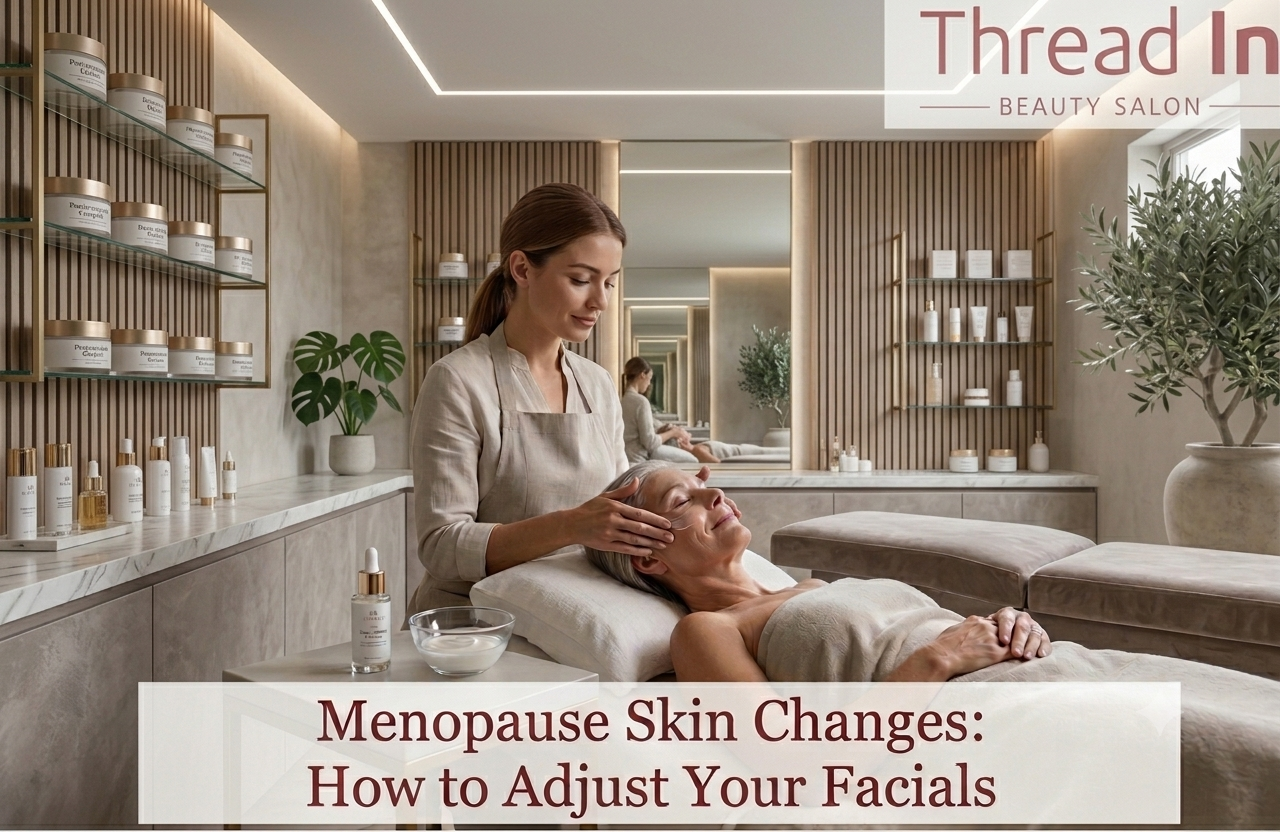
For years, you used the same cleanser and moisturiser and booked the same facial, and it all worked. Lately, though, your skin feels tight after washing. A product you have always loved now stings. Your last facial left your face pinker than usual.
If this sounds familiar, you are not alone. Menopause skin changes can affect how your skin feels and how it reacts to products and treatments. But everyone is different. Some people notice big changes, others notice very little, and not every skin change is caused by menopause.
This guide explains what may change, how to adjust your routine, and what to think about before your next facial.
What Can Change in Your Skin During Menopause?
As hormone levels shift during the menopause transition, many people find their skin behaves differently. Common menopause skin changes include:
- Dryness or tightness, especially after cleansing
- More sensitivity, where products that once felt fine now sting or cause redness
- Changes in texture and firmness, with skin feeling thinner or less bouncy
- Fine lines that seem more noticeable
- Pigmentation or uneven tone, such as sunspots, that remain a concern
Hormones are only part of the story. Age, years of sun exposure, genetics, general health and skincare habits all play a role too. This is why two women of the same age can have very different skin.
When Your Old Skincare Routine Stops Working
A routine that suited you at 35 may not suit you now. That does not mean you need a cupboard full of new products. Often, the answer is doing less.
Start with a few honest questions:
- Does your cleanser leave your face feeling squeaky or tight? It may be too harsh. A gentle cleanser should leave skin feeling comfortable.
- Are you exfoliating often? Scrubs and exfoliating acids can be too much for skin that has become drier or more sensitive.
- Are you using several strong products at once? Layering retinol, acids and vitamin C serums together can overload sensitive skin.
Good skincare for menopausal skin usually comes down to the basics: a gentle cleanser, a moisturiser you use every day, and sunscreen every morning. If you want to try something new, add one product at a time and wait a couple of weeks before adding another. That way, if your skin reacts, you will know the cause.
If you use a prescribed skin cream, do not stop it on your own. Check with your doctor or pharmacist first.
How to Decide What Your Skin Needs Before Booking a Facial
Before you book, work out your main concern right now. This helps you and your therapist choose the right approach.
- Skin feels tight or flaky? Focus on hydration and gentle care.
- Products sting or burn? Mention this when you book. Ask whether the facial should be adjusted, or whether it is better to wait until your skin settles.
- Uneven tone bothering you? Ask what options suit you. Exfoliation is not always the right choice for sensitive skin.
- Skin feels less firm? Keep expectations realistic. A facial can help skin look fresher, but it cannot undo natural changes in firmness.
A facial should be chosen for your skin as it is today, not based on your age alone.
Is a Facial for Mature Skin the Right Choice?
“Mature skin” is a general term. It is not a diagnosis, and it does not mean one treatment suits everyone over a certain age. A facial for mature skin may suit one person perfectly and irritate another.
Before booking, ask:
- Can the treatment be adjusted for dryness or sensitivity?
- Does it include exfoliation, extractions or other steps that might irritate my skin?
- Should I mention the products I use or any past reactions?
- What results can I realistically expect after one visit?
Depending on the treatment, a professional facial may help cleanse and hydrate the skin and leave it looking brighter. It cannot stop menopause, and it cannot promise to remove wrinkles or pigmentation.
What to Discuss During Your Facial Consultation
A good consultation helps your therapist understand your skin. Before your appointment, jot down:
- Your main skin concern and roughly when it started
- Any products that now cause stinging, redness or itching
- Recent changes to your skincare routine
- Known allergies, sensitivities or past reactions
- Prescription skin treatments or recent professional skin procedures
With this information, your therapist can talk about which steps suit you and what may need to change. Keep in mind that a beauty therapist cannot diagnose hormonal or medical skin conditions. For those, see your GP.
How to Care for Your Skin After a Facial
Aftercare depends on the facial you had and how your skin responds. Follow your therapist’s advice, use gentle products your skin already tolerates, avoid rubbing your face and protect it from the sun.
If your skin feels irritated, resist the urge to try several new products to fix it. That often makes things worse. If a reaction is severe, keeps getting worse or does not settle, seek medical advice. For more detail, read our 48-hour facial aftercare guide.
Skin Changes That Should Not Automatically Be Blamed on Menopause
It is easy to put every new skin issue down to menopause. But some changes need a proper check. See a GP or dermatologist if you notice:
- A new spot, mole or patch that is changing in size, shape or colour
- A rash that does not go away
- Significant redness, swelling or inflammation
- A sudden change in pigmentation with no clear reason
These may have nothing to do with menopause, and a facial is not a substitute for a medical assessment.
Exploring Facial Options With Us
We are a women-only beauty salon in Bennett Springs, Perth, offering a range of facials. Our Deluxe Facial is a 60-minute customised treatment designed around your skin’s condition, with a deep cleanse and extractions. Our Signature Facial is a 90-minute Vitamin E facial that also includes eyebrow and lip threading, plus a hand, neck and shoulder massage.
Neither is a menopause-specific treatment. If you are not sure which facial suits your skin right now, just tell us. We will discuss your skin concerns and product preferences before choosing a treatment, and you will fill in a short facial consultation form when you arrive.
Conclusion: Adjust Your Routine to Your Skin Today
Your skin changes over time, and a routine that worked before may need to be simpler now. Focus on what your skin needs today, avoid unnecessary irritation and keep up gentle daily care. Before any facial, talk through your concerns so the treatment suits your skin, not just your age.
If you would like to chat about which facial may suit you, visit our contact page.
FAQs
1. Can menopause make skin drier or more sensitive?
Yes, for some people. Hormonal changes may leave skin feeling drier or reacting more easily to products. Not everyone experiences this, and other factors can also play a part.
2. How should I adjust my skincare routine during menopause?
Keep it simple. Choose gentle products, moisturise daily, wear sunscreen and cut back on harsh scrubs. Introduce new products one at a time.
3. Is a facial suitable if my skin has become more sensitive?
It may be, but tell your therapist first. Some steps, such as exfoliation or extractions, may need to be adjusted or skipped. If your skin is irritated right now, it may be best to wait.
4. How often should I get a facial during menopause?
There is no single rule. It depends on the treatment, your skin and how it responds. Sensitive skin may need more time between appointments. Ask your therapist what suits you.
5. Can a facial reverse menopause-related skin ageing?
No. A facial may help skin look fresher and feel more hydrated, but it cannot reverse hormonal changes or permanently remove wrinkles.