
Finding a few thick, dark hairs on your chin can make you wonder why they are there. This is especially true if you have PCOS (polycystic ovary syndrome) or think your hormones might play a part. Facial hair is different for everyone, and some women do notice more of it when they have a hormone condition.
This guide explains the link between chin hair and PCOS, simple ways to remove the hair if you want to, and when it may help to see a doctor. Removing facial hair is your choice. You do not have to do it.
Why Can Chin Hair Grow With PCOS?
PCOS can raise the level of hormones called androgens, or make hair roots more sensitive to them. People often call androgens “male” hormones, but everyone has them. In some women, these hormones can make hair on the chin, upper lip and jawline grow thicker and darker.
Most people have soft, fine hair on their face. With PCOS, some women notice more thick, dark hairs over time. But chin hair alone does not mean you have PCOS. Your genes, family background, age and hormones all affect how much facial hair you have, and PCOS affects every woman differently.
Chin Hair in Women: What Is Normal and When to Get Advice
Many people ask whether chin hair women notice is normal. Most of the time, it is. A few dark hairs on the chin are common, and they often show up more with age or around menopause. If the hair does not bother you, there is no need to remove it.
What matters more is change. Pay attention to hair that is new, growing quickly, or coming with other new symptoms like irregular periods or ongoing acne. If you notice this, it is a good idea to see a GP instead of only dealing with the hair at home.
Simple Ways to Remove Facial Hair
Tweezing works well for a few stray hairs. It is slow for bigger areas, though, and some people get ingrown hairs. Shaving with a facial razor is quick and does not hurt. It does not make hair grow back thicker, which is a common myth, but the hair comes back sooner because it is only cut at the surface.
Threading and waxing pull hair out from the root, so your skin usually stays smooth for longer. If you want something longer-lasting, you can ask a qualified provider about laser hair reduction or electrolysis. Whether these suit you depends on your hair colour, skin type and personal situation.
Keep in mind that every method only removes the hair you can see. None of them change the hormones that may be causing the growth.
Threading for Facial Hair: Is It Right for You?
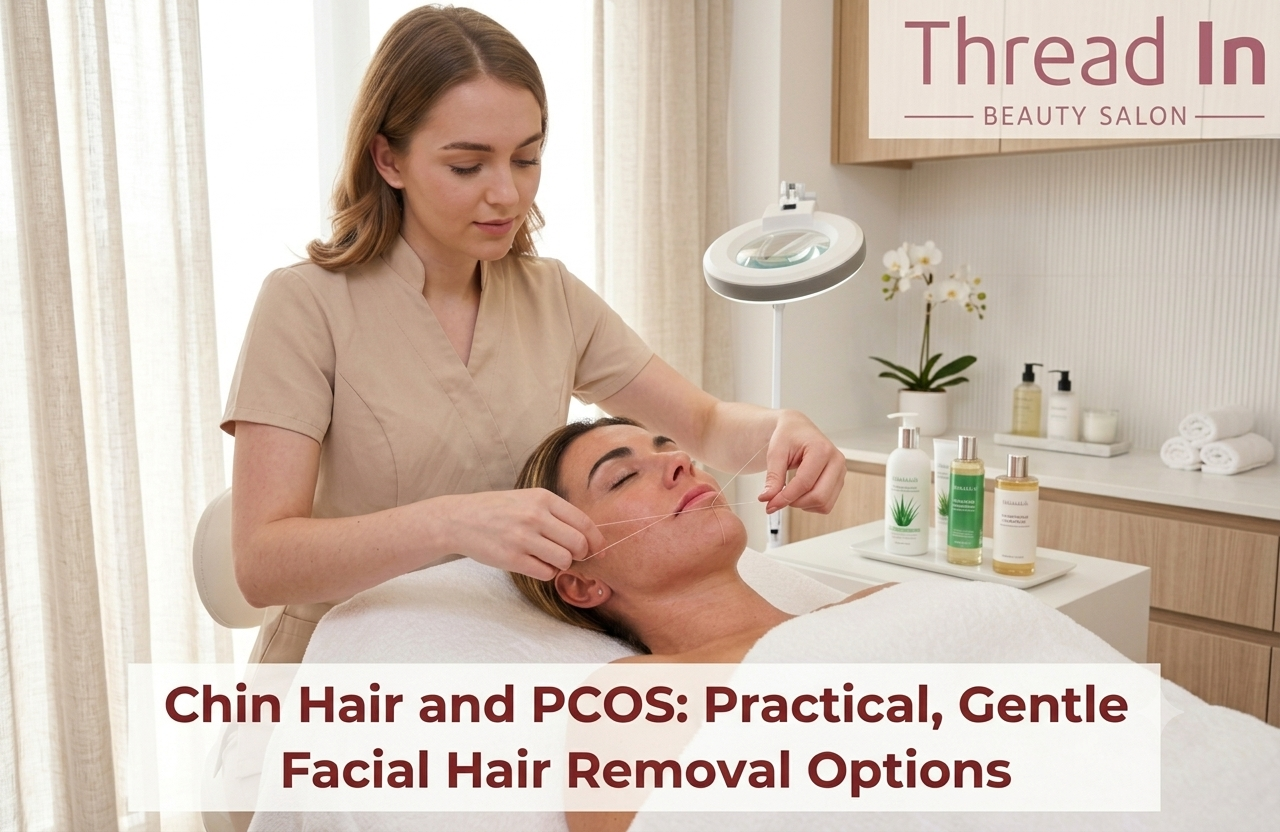
Threading uses a thin cotton thread that is doubled and twisted. The thread is rolled over the skin and lifts hairs out from the root. It can catch rows of fine hair and single thick hairs, which is why many women choose threading for facial hair on the chin, where careful work on a small area matters.
How it feels is different for everyone. Some people barely feel it, while others find some spots more sensitive, especially the first time. Your skin may look a little red afterwards, and this usually settles. Clean tools and a skilled therapist matter, because a poor technique can snap hairs instead of removing them properly.
The state of your skin matters too. If an area is irritated, your therapist may suggest waiting or working around it. Threading does not stop hair from growing, so it will come back over time.
How to Be Gentle on Sensitive Skin
Pick a method that suits how your skin is right now. Before your therapist starts, tell them if your skin is sensitive, has reacted to treatments before, or has any other concerns. Do not remove hair from skin that is broken, swollen, sunburnt or has pimples in that area.
Some skincare products, such as certain exfoliators and prescription creams, can make your skin react more easily. Tell your therapist what you use. Do not stop any prescribed treatment without first checking with your doctor or pharmacist.
After your appointment, follow the aftercare advice you are given. Try not to touch, rub or scrub the area. Some redness can happen with any method. If it does not go away, let your therapist know.
Why Does Chin Hair Keep Coming Back With PCOS?
It is normal for hair to grow back. Hair removal only takes away the hairs that are already there. It does not change the hormones that may cause new hairs to grow. If the hair comes back quickly, it does not mean you did anything wrong or chose the wrong method.
If the hair keeps coming back or is affecting how you feel, you can talk to a GP about medical options alongside hair removal. Managing PCOS may help some women, but results vary and it may not stop facial hair completely. What you do about it, and whether you remove it at all, is up to you.
Threading or Waxing: Which Should You Choose?
Threading is good for careful work on small areas and single thick hairs. Waxing covers a bigger area at once, so some people prefer it for the jawline, neck or full face. Neither one is gentler for everyone.
Think about your skin too. If certain products have made your skin sensitive, waxing may not suit it at that time. Comfort is also personal, and some people simply prefer how one method feels over the other.
Thread In Beauty Salon offers chin waxing with hot wax, cold wax or natural sugaring, as well as threading. A quick chat at your appointment can help you choose what suits your hair and skin.
When Should You Get Professional Advice?
A beauty therapist can suggest the right hair removal method and adjust the treatment for your skin. They cannot tell you whether you have PCOS or treat the hormones behind it. Threading and waxing are beauty treatments only.
See a GP if you think you may have PCOS but have not been checked, if your facial hair has changed suddenly or along with other new symptoms, or if it is affecting how you feel. Not everyone with chin hair needs medical treatment, and simply wanting answers is a good enough reason to ask.
At Thread In Beauty Salon, a women-only salon in Bennett Springs, appointments are private and you have time to ask questions before you start. You can book by phone, text, WhatsApp or Facebook Messenger.
Final Thoughts
Chin hair is common and nothing to be embarrassed about. PCOS can cause more facial hair, but chin hair alone does not tell you the cause. Threading, waxing and other methods remove the hair you can see, but they do not treat your hormones, so choose the method that feels comfortable and suits your skin. If the hair is new, growing quickly or comes with other symptoms, see a GP.
FAQs
1. Will removing chin hair make it grow back thicker?
No. Threading, waxing and shaving do not make hair thicker or make more of it grow. If you notice more hair over time, hormones are a more likely reason, and it is worth telling your GP.
2. How long should chin hair be before threading?
The hair needs to be long enough for the thread to grab it. Try not to tweeze or shave for a little while before your appointment. Your therapist can tell you what works best for your hair.
3. Can I tweeze a stray hair between appointments?
Yes, tweezing the odd hair is fine. Just do not pick at your skin or dig for hairs under the surface, as this can leave marks and cause ingrown hairs.
4. How long does chin threading take?
It usually takes just a few minutes, depending on how much hair there is. You can easily have your brows or upper lip done in the same visit.
5. Can I get other areas threaded, like my jawline or neck?
Yes. Thread In Beauty Salon offers threading for the side face, neck, forehead and full face as well as the chin, so you can pick only the areas you want done. If you are thinking about your brows too, our guide on how to get rid of a unibrow compares threading and waxing for that area.