
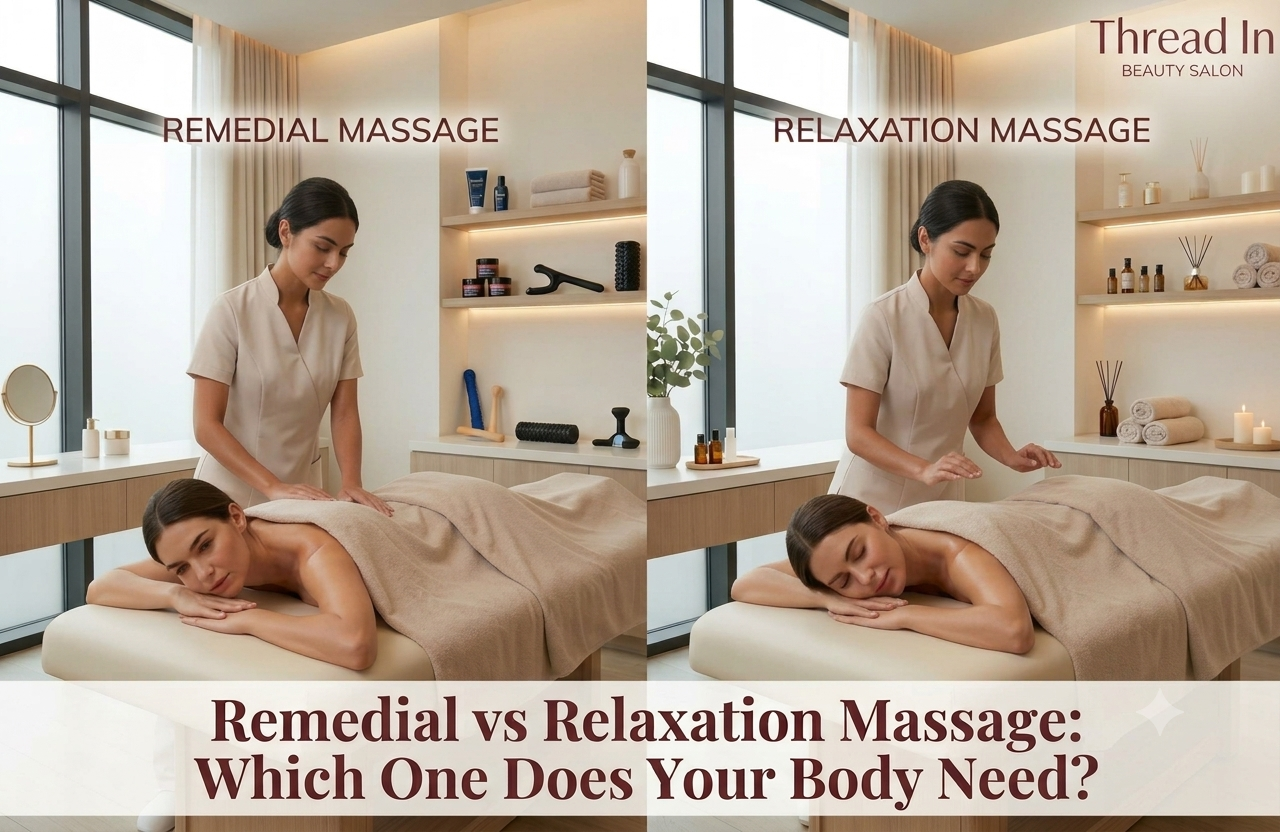
A massage meant to help you switch off and one aimed at a specific area of tension can feel very different on the table. The remedial vs relaxation massage question matters because the two are usually booked for different reasons. Picking the wrong one can leave you feeling under-worked, or sore when you only wanted to unwind.
This article explains how each approach works, where they overlap and how to choose between them.
What Is Remedial Massage?
If you are asking what is remedial massage, the short answer is that it is a more targeted style of massage. It is often used for specific areas of muscle tightness, stiffness or discomfort, rather than for general relaxation.
A remedial session usually begins with a conversation. The therapist may ask where you feel tension, how long it has been there, what your daily routine looks like and whether anything makes it better or worse. They may also check how you move or stand. The massage that follows concentrates on the areas you have mentioned, and the therapist may adjust pressure and technique as they go.
Remedial massage is often used for things like a stiff neck after long hours at a desk, tight shoulders, a sore lower back or muscles that feel overworked from repetitive movement. It may help ease muscle tension and improve how an area feels, but it is not a cure for any medical condition, and results vary from person to person.
What Is Relaxation Massage?
Relaxation massage is designed mainly to help you unwind. The pressure is typically light to medium, the pace is slower and the strokes tend to be long, flowing and rhythmic across the whole body or a large part of it.
Rather than working on one problem area, the therapist aims to create a calm, restful experience. Many people find that this kind of touch helps them feel less tense and more settled. It is often chosen as a treat, a way to slow down after a demanding few weeks or a routine break from a busy schedule.
You can still ask for extra attention on a tight spot, and a therapist may be happy to give it. The overall goal stays on comfort and relaxation rather than working through a specific issue in depth.
Remedial vs Relaxation Massage: What’s the Difference?
Here is how the two compare in practice. The exact experience varies between practitioners and clients, so treat this as a general guide.
| Remedial massage | Relaxation massage | |
| Main purpose | Addressing specific areas of tension or discomfort | General relaxation and stress relief |
| Pressure | Often firmer, adjusted to the area being treated | Usually light to medium |
| Approach | Focused work, often combined with a discussion beforehand | Slow, flowing strokes with a consistent rhythm |
| Areas of focus | Particular muscles or regions you have mentioned | Typically the whole body or large areas |
| Typical goals | Easing tightness, improving how an area feels and moves | Unwinding, feeling calm, taking a break |
| How it may feel | Purposeful, sometimes intense on tight spots | Soothing and gentle |
| Often considered when | A particular area feels stiff, tight or overused | You want to rest rather than address something specific |
Firmer pressure does not automatically mean a better result. Remedial work can feel uncomfortable in places, though it should stay within what you can tolerate, and you can always ask for less pressure.
Difference Between Remedial and Relaxation Massage in Practice
The simplest difference between remedial and relaxation massage is what you are trying to get out of the session. Remedial massage starts with a problem or a pattern of tension and works towards it. Relaxation massage starts with the experience and aims to leave you feeling calmer.
Both can ease tight muscles and both can feel restful, so the line is not absolute. A remedial session may leave you feeling relaxed, and a relaxation massage may loosen a stiff shoulder. The difference lies in the intention, how much of the hour is spent on specific areas and how much pressure is used.
Which Massage Should You Choose?
These situations may help you decide. They are not a diagnosis, and a therapist can help you refine the choice.
Relaxation massage may be the better fit if:
- You feel generally stressed or worn out, with no particular sore spot
- You want an hour to rest and be looked after
- You are new to massage and prefer gentle pressure
- You find firm pressure uncomfortable
Remedial massage may be the better fit if:
- The same area, such as the neck, shoulders or lower back, keeps feeling tight
- Your discomfort seems linked to posture, repetitive tasks or training
- You want a session focused on one or two areas rather than the whole body
- You are comfortable with firmer pressure and some discussion about your body
If you land in the middle, you could book a relaxation massage and ask the therapist to spend a little extra time on one area. Or you could book a remedial session and ask for a lighter touch. Telling the therapist what you want helps them tailor the session.
What to Expect During a Massage Session
Before. Expect a short chat about what you want from the session, any areas of discomfort and relevant health details. Mention injuries, medical conditions, pregnancy, allergies to oils or lotions and anything that has made massage uncomfortable before. Remedial sessions often involve more questions than relaxation sessions.
During. You will usually be covered with a towel or sheet, with only the area being worked on exposed. Speak up if the pressure is too much or too little. A good therapist expects feedback and will adjust. Relaxation massage tends to be quiet and steady, while remedial work may involve more checking in.
After. Drink water if you are thirsty and give yourself a few minutes before rushing off. After a firmer remedial session, some people feel mild tenderness in the worked areas for a day or so. After a relaxation massage, many feel loose and calm. If anything feels unusual or worrying afterwards, contact your therapist or a healthcare professional.
When Should You Speak to a Qualified Health Professional?
Massage can be a useful part of looking after your body, but it is not a replacement for medical assessment. Consider seeing a doctor or another appropriate healthcare professional if you have:
- Pain that is severe, persistent or getting worse
- Pain with no clear cause
- Numbness, tingling or weakness
- Swelling, redness or heat in an area
- Pain following a fall, accident or injury
- Discomfort alongside other symptoms that concern you
A healthcare professional can tell you whether massage is appropriate, and your massage therapist can work alongside that advice.
Frequently Asked Questions
1. Is remedial massage always painful?
No. It can feel intense on tight areas, but it should not be unbearable. Sharp or excessive pain is a signal to tell your therapist so they can ease off.
2. Can a single session include both styles?
Often, yes. Many people book a general session and ask for more time on a particular area. Discuss it with your therapist at the start so the hour is planned accordingly.
3. How often should I book a massage?
There is no fixed rule. Some people go occasionally for relaxation, while others book a few sessions close together when an area feels troublesome. Your therapist can suggest a sensible schedule based on your situation.
4. Do I need to know which type to book before I arrive?
Not necessarily. If you are unsure, describe what you want the session to do for you, such as help you unwind or focus on a tight shoulder, and ask which style suits that goal.
5. Will light pressure still be worthwhile?
Yes, if relaxation is your goal. Firmer pressure is not required for a massage to be enjoyable or beneficial.
6. Should I tell my therapist about my medical history?
Yes. Share anything relevant, including injuries, medical conditions, medications and pregnancy, so the therapist can adjust the massage safely.