
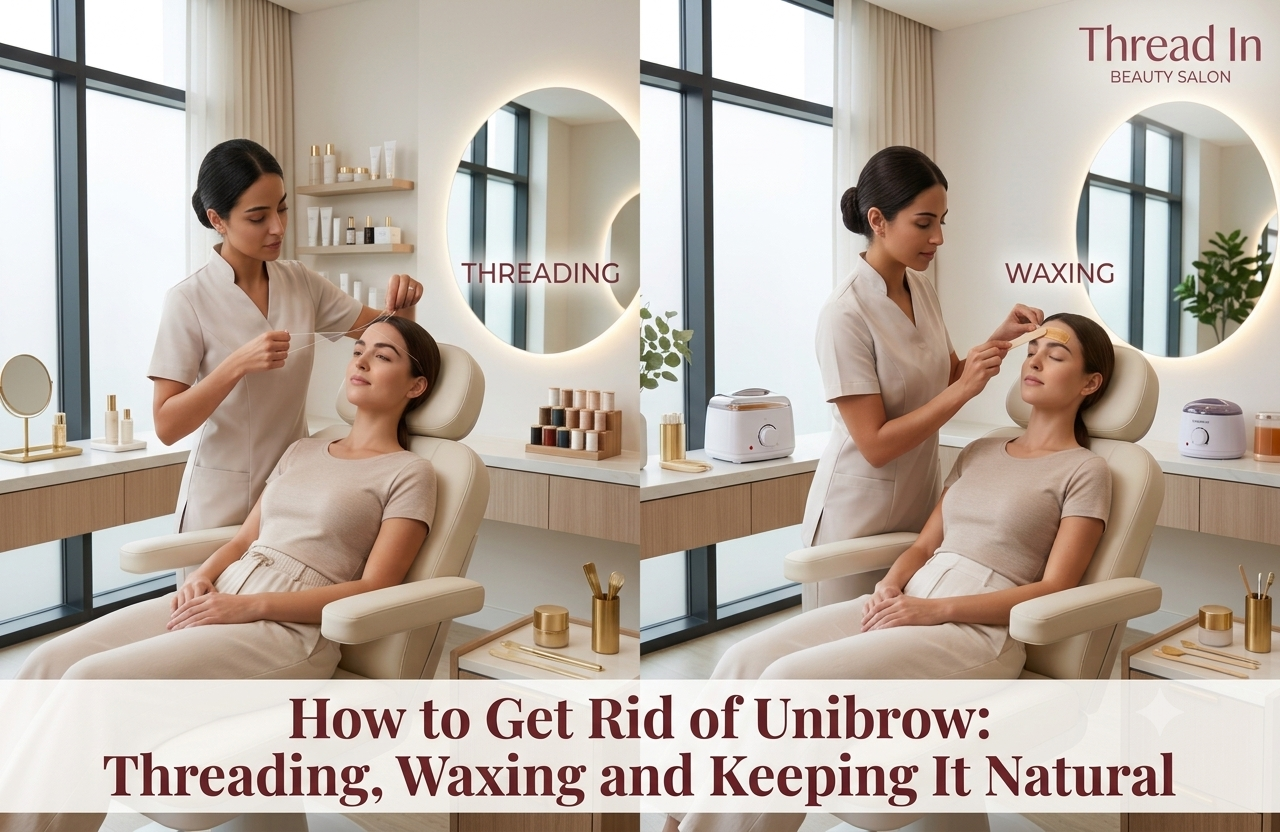
You spot it in the mirror: a few stray hairs, or a fuller patch, bridging the space between your brows. You do not want new eyebrows, just a cleaner gap. If you are working out how to get rid of unibrow hair without changing your natural shape, threading and waxing are two common options, and the right one depends on your skin, hair and comfort.
What Is a Unibrow and Why Does Hair Grow Between the Eyebrows?
A unibrow is hair growing across the space between the eyebrows, so the brows appear to meet in the middle. For some people it is a few fine hairs; for others, a darker, denser bridge. Both are normal. Genetics and individual growth patterns can influence where brow hair grows, so every gap looks a little different. Grooming it, or leaving it, is entirely your choice.
How to Get Rid of Unibrow Hair Without Losing Your Natural Brow Shape
When deciding how to get rid of unibrow hair, the first step is working out where the gap ends and your brows begin. Stand back from the mirror instead of leaning into a magnifier, and notice where the denser hair of each brow starts. That natural starting point, not a ruler or rule of thumb, is your guide.
From there, you might tweeze a few strays or book threading or waxing. Whichever you choose, start conservatively: the inner corners help define your brows, and hair removed there can take a while to grow back.
Unibrow Threading: How It Works and When to Consider It
During unibrow threading, a therapist rolls a twisted thread across the skin between your brows, catching hairs and lifting them from the root. The thread can also pick out single hairs. That makes it worth considering if you want precise control over exactly where each brow begins.
Expect a quick, repeated tugging sensation and possibly some temporary redness. Comfort and results vary with your skin, your hair and the therapist’s technique, and because threading is not permanent, the hair will grow back.
Unibrow Waxing: What to Expect and Who May Prefer It
With unibrow waxing, a therapist applies suitable wax between your brows, then removes it along with the hair. Because wax removes hair across the whole area it covers, careful placement matters: it needs to stop short of each inner brow. Some people prefer waxing when there is a fuller patch to clear.
Expect a brief, sharp sensation as the wax comes off, and possibly temporary redness, sensitivity or irritation. Waxing may not suit skin that is irritated or damaged, or affected by certain topical products or treatments, so tell your therapist about your skincare routine and any concerns first.
Unibrow Threading vs Unibrow Waxing: How They Differ Between the Brows
| Factor | Threading | Waxing |
| Method | A twisted thread | A suitable wax |
| Precision near the inner brow | Can target single hairs | Relies on careful wax placement |
| Skin considerations | May cause temporary redness or sensitivity | May cause temporary redness, sensitivity or irritation |
| Often chosen for | Careful, hair-by-hair tidying | Clearing a fuller patch at once |
No single method suits everyone. Consider how sensitive your skin is, how much hair sits between your brows, what feels comfortable and the look you want. For a broader view, see how threading and waxing compare across the brows and face.
How to Keep Your Eyebrows Looking Natural After Unibrow Grooming
A few habits help the gap stay neat without slowly creeping wider:
- If you tidy strays between visits, stick to the middle. Tweezing new hairs at the start of each brow can widen the gap over time.
- Ask for the same starting points at each appointment, and say if you only want the centre tidied, not a full reshape.
- Let your natural outline lead. Brows vary, and the space between them has no ideal width.
Aftercare Tips Following Threading or Waxing
The skin between your brows sits in the oilier T-zone, so a light-touch approach helps afterwards:
- Keep your hands away from the area, and do not rub or pick at it.
- Cleanse gently, and go easy on makeup and heavy products there until any redness fades.
- Skip harsh scrubs and strong active skincare on that spot, and limit heat and heavy sweating until your skin has calmed.
- Follow your therapist’s aftercare instructions, and seek professional advice if irritation is significant or does not settle.
When to Choose Professional Eyebrow Threading or Waxing
A professional can help if the hair between your brows is dense, if keeping the gap even at home has been tricky, or if you are new to threading or waxing. Start with a brief conversation about the result you want, anything your skin reacts to and which method your therapist recommends.
Thread In Beauty Salon, a women-only salon in Bennett Springs, Perth, offers eyebrow threading, and its waxing services include facial areas such as the lip, chin and full face. If you are unsure which method suits the area between your brows, ask when you book.
Choosing What Works for Your Brows
The right answer to how to get rid of unibrow hair depends on you. Unibrow threading can offer fine control near the inner brows, while unibrow waxing can suit denser growth across the centre, and both are temporary. Whether you thread, wax or leave it as it is, choose what suits your skin, your comfort and your natural shape.
FAQs
1. Do I need to remove my unibrow?
Not at all. A unibrow is a natural hair pattern, and grooming it is a personal choice. Keeping it, tidying it or clearing it are all equally valid.
2. Will the hair between my brows grow back?
Yes. Neither threading nor waxing is permanent, so the hair will return. How soon it becomes noticeable depends on your own growth cycle.
3. Is threading suitable for the hair between my eyebrows?
It can be, particularly for fine-tuning the gap close to your inner brows. Unibrow threading does involve some tugging and possible redness, and comfort varies, so let your therapist know about any skin sensitivity beforehand.
4. What should I think about before waxing between my brows?
Consider your skin’s current condition and any topical products or treatments you use. Share both with your therapist before unibrow waxing so they can confirm it suits you, or suggest another option.
5. Is redness normal after threading or waxing between the brows?
Temporary redness or sensitivity is common after either method. Keep the area clean and hands-off, and seek professional advice if irritation is significant or lingers.