
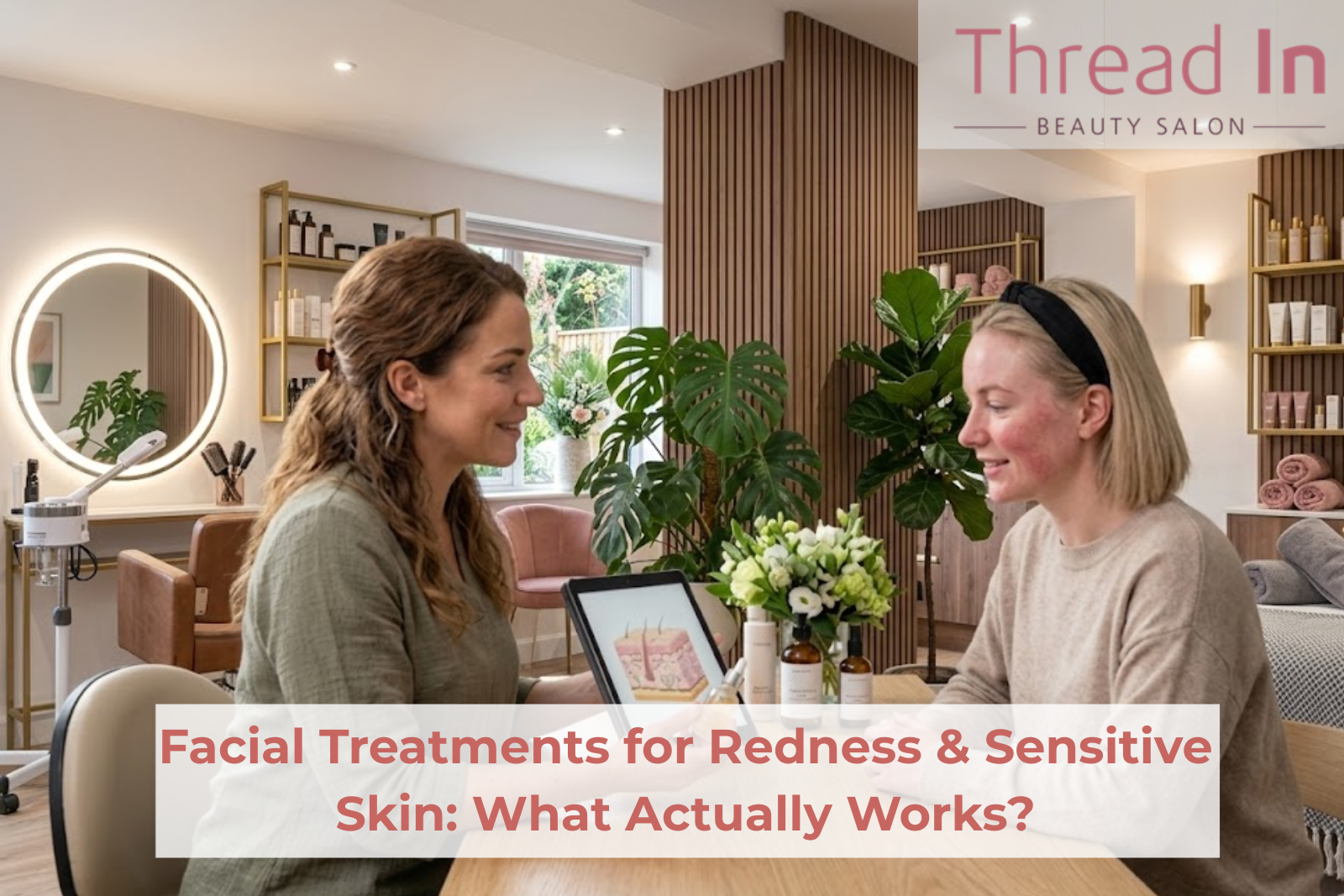
You wash your face and it turns pink. You try a new moisturizer and your cheeks feel hot by afternoon. Or you look flushed even though your routine has not changed. If this sounds familiar, you are not alone.
Many people start looking at facial treatments for redness when this happens. That is a sensible step, but there is one thing to know first. Redness has more than one possible cause, and skin that looks the same can need very different care. Choosing a treatment only by how your skin looks may not be enough.
This guide explains what may be behind your redness, when a gentle facial may be worth discussing, what to ask before you book and when to see a doctor instead. A facial cannot promise to remove redness, but good questions can help you make a safer choice.
What Could Be Causing Your Facial Redness?
Redness is a sign, not a diagnosis. Some common possibilities are:
- Skincare products. Fragrance, strong active ingredients or a brand-new product can upset your skin.
- Too much scrubbing or cleansing. Over-exfoliating or washing your face too often can leave skin raw and pink.
- Heat and sun. Hot showers, exercise, wind and strong sun can all make your face flush.
- Dry or tired skin. Your skin barrier is the outer layer that holds in moisture. When it is worn down, skin can sting and look red.
- Medical conditions such as rosacea. These need a doctor’s assessment, not just a new skincare routine.
These causes can look alike, but they may need different care. Flushing after a hot day is not the same as a reaction to a product, and neither is the same as a long-term skin condition. A beauty therapist can talk through your skin and your routine, but only a doctor can diagnose a skin condition. Not all redness comes from sensitive skin.
When Can a Facial Help Sensitive Skin?
Facial treatments for sensitive skin can help in a simple way. A gentle facial cleanses the skin, supports hydration and gives you some quiet time. If your skin is just dry or tired, that can feel good.
Whether it helps depends on how your skin is on the day, the products you use and how your skin has reacted before. A careful consultation should cover:
- What your skin is doing right now, such as stinging, flaking or heat
- The products you use, especially anything new
- Past reactions to facials, waxing, tinting or skincare
- Any skin condition a doctor has told you about
- What you hope to get from the visit
At Thread In Beauty Salon, clients are asked to arrive a little early to fill out a facial consultation form. This gives you a chance to talk about your skin before a treatment is chosen.
If your skin is already irritated, a gentler approach, or waiting a while, is often the better choice. Not every facial suits sensitive skin, and having a treatment in a salon does not stop a reaction from happening.
Which Facial Approach Might Suit Your Skin Concern?
The right next step depends on what your skin is doing.
- Dry, tight or uncomfortable skin. A gentle, hydration-focused facial may be worth discussing. Ask for simple steps and nothing harsh.
- Skin that turned red after a new product. Stop the new product, keep the rest of your routine simple and let your skin settle before booking. When you do book, tell your therapist what you used.
- Skin that looks flushed after heat or exercise. This often fades as you cool down. Notice what sets it off. A facial is unlikely to be the main answer here.
- Recurring redness, visible small blood vessels or burning that does not go away. See a GP first (more on this below).
Thread In Beauty Salon’s facial page lists Express, Deluxe and Signature facials, along with treatments such as Micro Dermabrasion. It says the salon has treatments suitable for sensitive skin, but it does not list a facial made specifically for redness. So none of these should be treated as a redness treatment. For example, the Express Facial is a 30-minute cleanse, the Deluxe Facial includes extraction, and Micro Dermabrasion is a resurfacing treatment that exfoliates the skin. Which one suits you depends on your skin, so talk it through first.
How to Choose a Facial for Redness
When you are choosing a facial for redness, the strongest option is not always the best one. Extra steps can be harder on skin that is easily upset. Before you book, ask:
- Can the treatment be adjusted for my skin sensitivity?
- Will it include exfoliation, steam or extractions that might irritate my skin?
- Should I wait if my skin is inflamed right now?
- Which products and past reactions should I tell you about?
The salon’s facial page says each facial includes gentle exfoliation, so it is fair to ask how that step will be done on your skin. If the answers leave you unsure, it is fine to wait. A good therapist will be happy to explain.
What to Avoid When Your Skin Is Already Irritated
- Scrubbing red skin. Rubbing harder will not help. Use your fingertips and lukewarm water.
- Exfoliating more because skin looks flaky. Red, flaky skin often needs less, not more.
- Starting several new products at once. If your skin reacts, you will not know which one caused it.
- Carrying on with a product that keeps burning or stinging. Stop using it and ask a pharmacist or your GP if the reaction continues.
Always follow the directions on your products. If redness lasts or gets worse, get professional advice. Do not stop any prescribed skin medication without asking the doctor who gave it to you, and do not use a facial in place of medical care.
What to Do Before and After Your Facial
Before your appointment:
- Tell your therapist about known sensitivities, recent reactions, the products you use and any skin treatments you have had lately.
- Arrive a little early to fill out the consultation form.
- Avoid trying a brand-new product the day before.
After your appointment:
- Use a gentle cleanser and moisturise if it suits your skin.
- Wear sunscreen. The Perth sun is strong, and treated skin can feel more sensitive.
- Follow your therapist’s instructions for the treatment you had. Different facials need different care.
- If your skin stings, burns or gets redder instead of settling, contact the salon.
When Facial Redness Needs More Than a Beauty Treatment
A facial can support your skincare, but it cannot diagnose or treat a medical condition. See a GP or dermatologist if:
- Redness keeps coming back or does not go away
- It is getting worse, or you cannot find a cause
- You also have burning, pain, swelling, bumps or thickened skin
- You notice small visible blood vessels or frequent flushing
- Your eyes feel sore or irritated as well
In these cases, another facial is not the answer. Get checked first, then ask your doctor whether facials suit you. If you have swelling of the face, lips or throat, or trouble breathing, call 000 straight away.
Choosing a Suitable Facial in Perth
If you are searching for a sensitive skin facial Perth that fits your needs, look for a salon that is happy to talk before it treats. Thread In Beauty Salon is a women-only salon in Bennett Springs, Perth. You can look through the salon’s facial options and ask which may suit your skin.
You do not need to pick a treatment first. Describe your concerns, mention any past reactions and use the questions in this guide. Then you can decide whether to book, wait or see a doctor.
Conclusion
The right approach depends on why your skin is red, how it feels today and how well it handles treatment. Start by noticing what seems to trigger your redness, keep your routine simple and ask questions before you book. If the redness keeps returning, gets worse or worries you, see a GP or dermatologist first.
If you would like to talk about your skin and the facial options available, Thread In Beauty Salon is happy to help. Visit our contact page to ask a question or arrange an appointment, and share your concerns before you decide on a treatment.
FAQs
1. Can a facial help reduce facial redness?
A gentle facial may help your skin feel cleaner and more comfortable. But it cannot promise to remove redness, and it does not treat medical conditions such as rosacea. If redness keeps returning, see a GP.
2. Which facial is suitable for sensitive skin?
No single facial suits everyone. A simple, gentle facial is often easier on easily irritated skin than a strong exfoliating one, but it depends on your skin. Talk to your therapist about your concerns before you choose.
3. Should I get a facial if my skin is already irritated?
If your skin is red, stinging or peeling, it is usually wise to wait and check with the salon first. Treating skin that is already upset can add more stress to it.
4. Can a facial make redness worse?
It can, if the treatment or products are too strong for your skin on that day. That is why a consultation matters. Mild pinkness can happen after some treatments, but strong burning, swelling or redness that keeps getting worse should be reported to the salon and checked by a GP or pharmacist.
5. When should I see a doctor about persistent facial redness?
See a doctor if redness keeps coming back, does not fade, is getting worse or comes with pain, swelling, bumps or eye irritation. A doctor can find the cause, which a facial cannot do.